Leah Hazard: How to be a midwife activist and not be sacked.

Ruth Weston heard midwife activist, Leah Hazard, speak at the ARM 50th Anniversary Conference this summer. Ruth (with Leah’s permission) has summarised Leah’s exceptional talk about how to be a working midwife and safely advocate for improvements to midwifery.

From her speech at the ARM 50th anniversary Conference June 2026

Until this last year, Leah Hazard said, she would not have described herself as an activist but now she describes herself as “the resident midwifery big mouth!”. At the ARM 50th anniversary conference in June, Leah probably gave the most practical and important speech of the day: how to be an activist midwife and not be sacked for it.

As with Ruth’s Born Stroppy, being an activist slowly crept up on her before bursting into the public domain.  In October 2025 her activism really took off, with the death of the Cahills as the trigger.  The midwives who had been caring for the Cahills had been awake for 30 hours.  This is not an exception for midwives – dangerous though it is both for families and midwives.  Excessive working shifts and working hours for midwives have become normalised in the current maternity system.

Leah said the NMC code has a duty of candour, the question was how to speak out effectively whilst retaining her current role and career in midwifery. She shares her wisdom with us here.

  1. Do it, but be smart about it.

Yes! Do it!  Why should a woman and a midwife not write a book?  Midwives fear being punished and fear losing their job and career.  Leah feared this too but decided to do it anyway but be smart about it. Now, she said, “opening my big mouth has become a conduit between those at the grassroots/ frontline of delivering maternity care and the policymakers.”  She still gets “really scared” when weighing up what to say and do, and how to say and do it, but so far her activism has been safe and effective.

  1. Think like a medic – right intervention, right time?:

When midwives or medics deliver an intervention such as a drug, we ask ourselves, “Am I the right person, is this the right intervention, at the right time?” In the same way when we  speak out or take action (intervene) we ask ourselves:

  • Am I the right person to deliver this message?
  • Is what I am saying true? Real? Helpful?
  • Is the message clear and well focused?
  • Is this the right route for this message right now?
  • Is it the right time to be saying this?
  1. Follow the Code.

Follow the NMC Midwifery Code of Practice.

  • Promote the profession and trust in the profession
  • Act with honesty at all times
  • Use the media responsibly, co-operating with the media only as appropriate
  • Protect confidentiality and dignity.
  1. You also have an employer: don’t get fired
  • You need to check your contract – including and especially the small print.
  • Don’t disclose where you live and where you work
  • Never comment in the media on local issues, or criticise your employer in public
  • If it feels wrong – don’t do it. Use your instinct.
  1. Absolute No-No’s – never comment in the media on:
  • GB News and The Daily Mail (because of racism and other forms of bigotry)
  • Any news story/ media attention on your own Health Board/Trust/Hospital
  • Anecdotes about dangerous situations at work
  • Topics beyond your remit as a midwife (for instance, don’t comment on family tax credits, the dustbins or suchlike)

Leah was clear, straightforward and candid about her activism and being smart about it.  But it was clear that the lack of her Union’s support had given her pause for thought – she recognised what many grassroots midwives have already discovered, that the RCM is not for them when the chips are down.  Her final words were also telling: She told us that her next book is called Birth Wars, and is coming out in 2027. She will then probably be leaving frontline birth work. She hopes not to be sacked before then.

Challenging the system whilst on the inside is often time limited but clearly Leah is being smart about it: she has a plan.


How to structure kindness into Maternity Services.

Love is the Way: Systemic Kindness, 

Cardiff Sept 2026

SLIDE 2

Bishop Curry at the wedding of Prince Harry and Megan quoted Martin Luther King saying 

‘We must discover the power of love, the redemptive power of love. And when we do that, we will make of this old world a new world, for love, love is the only way.’’’


And he goes on to say:

Imagine this tired old world when love is the way, unselfish, sacrificial, redemptive. When love is the way, then no child will go to bed hungry in this world ever again. When love is the way, we will let justice roll down like a mighty stream and righteousness like an ever-flowing brook. When love is the way, poverty will become history. When love is the way, the earth will be a sanctuary. When love is the way, we will lay down our swords and shields down, down by the riverside to study war no more. When love is the way, there’s plenty good room, plenty good room, for all of God’s children. Because when love is the way, we actually treat each other, well, like we are actually family. 


Love is the way.  These are not platitudes and sentimental twaddle, this is soul and vision and strategy fired in the experiential furnace of structural and systematic racial discrimination and violence, with added persecution for those who resisted. In the words of Maya Angelou this is love that is both tough and tender.


Today as we contemplate and plan for the future of maternity services we need to learn the lessons of the black civil rights leaders.  If we want to put the Care back into Maternity Services, if we want to end the epidemic of maternal trauma, midwifery burnout and HCPs simply leaving the service… then Love is the only Way.


Twenty minutes is not long enough to provide a how-to guide on systemic kindness for Maternity Services, nor a thorough exploration of the arguments for implementation.  To hear more you will have to invite me to give you the full talk and some basic compassion and kindness training.  But I can give you a starter for 10 with headlines and signposts in three broad points. 


Slide 3

  1. Practice and Evidence:


A piece of research was done on some seminarians at a US college.  The students were told to research and write a sermon on the Good Samaritan which they would have to preach on a certain day for assessment.  The venue was so arranged that the students, one by one would have to cross campus to reach it, and an actor was set up part way to be a man in distress  – apparently homeless and drunk.  The researchers wanted to know who would stop and help the man and why.  


What they discovered was that stopping to help had nothing to do with the study and reflection on the Parable of the Good Samaritan. It was not predicated on whether the students rated themselves or others as kind either. What was critical was whether the person felt they had the time to stop – Those in a rush did not stop even if they had time, those who felt okay even if they were running late would stop. Time for kindness. Hold that thought.


Stephen Trxeciak is an A&E Consultant.  As he put it – you only meet me on the worst day of your life. After 20 years of this role he was burnout and mentally broken. Burnout was not uncommon amongst his colleagues, but whilst his colleagues’ response was to resign, retire and retreat to the country, he did something different: He did a deep dive into research.  What he discovered from over 2000 papers, was that kindness had an enormous impact on patient outcomes …and clinician mental health.


There was one piece of research he quotes at length for its outcomes: Oncology patients were split into a control group and an intervention group. The intervention was this:  At the beginning of the consultation the Doctor said and I quote:


I understand this is a very difficult time for you and this is a difficult conversation.  If there is anything you don’t understand or you want to ask, 

do not hesitate to stop me.  Because we want to support you every step of the way.


At the end of the consultation they said:


” I know this has been a very difficult conversation, be assured that we care for you and will be with you along this whole journey.


That is it.  That is all.The results showed that the patients who had this intervention did better than the control group. But there was more: the doctors providing this intervention also reported better mental and emotional wellbeing, lower stress etc. The medical staff benefitted from kindness as much as the patients. Hold that thought.


How much extra time did this intervention take in each consultation? They did time it: 40 seconds. An extra 40 seconds to be kind.

Do we have time for kindness? Do we have 40 seconds to be kind in our consultations? Kindness that benefits both the receiver AND the giver? 

Can that amount of time be structured into our system do you think?


Second. Practice makes Perfect.

It has been demonstrated that we all have within us the desire for kindness and the propensity to show great altruism.  People don’t come into maternity services saying I want to be a midwife or an Ob to be cruel to women and cause them harm.  So I am not going to patronise anyone here by saying you need to be more kind. 


What I do want to say is that to be a good pianist takes piano lessons and a lot of practice, to run a marathon requires training and commitment, to learn a profession such as midwifery requires training, learning and practice.  In the same way, say the Tibetans now backed up by neuro-science and psychology – to get really good at compassion and kindness you need commitment, training and practice. Not because you are not kind without it but because it takes practice to get really good at it – professional you might say, and it can take training to be good at it without burning out. 


Being really good at kindness and compassion benefits not just other people but also yourself.


SLIDE 4

I don’t have time to take you through a sample practice etc. so I am simply going to put on the screen here some loving kindness phrases.

  • If you feel comfortable now, hand on heart choose a phrase: May I be safe… Be curious about how it makes you feel – there is no special way you should feel. How would it be if you could show this kindness to yourself every day?
  • You may find it easier to say it for a loved one or someyour feel grateful towards….And then say it for both of us….may we be safe…
  • If you make it a daily practice you can say the phrases for the people you know you will meet today, maybe as you go along.
  • Maybe if you feel bold you can try saying the phrases for someone who irritates you sometimes. 
  •  If you are having a bad day say the phrases for yourself and anyone else having a crap time like you. I say the phrase – “Just like me there are people around the world who are grieving, in our pain may we all be filled and surrounded by loving kindness.”
  •  If saying the phrases is driving you nuts one day, stop – give yourself some kindness: put your hand on your heart or give yourself a hug.  The way you feel is the way you feel – there is no judgement in kindness, just love. And love is the way.


Doing this practice daily is a commitment although it does not take very long to do it. It is not a quick fix either but I can tell you from my experience (and you can read it in my book Born Stroppy) that it is transformative. Neuro-science backs this up: repeating these phrases builds new neural pathways, they teach your brain a new language to frame attitudes both towards yourself and towards others. If you are interested there is so much work on this!


SLIDE 5

Back to Dr T in his dark mental place. Having done his research,  he decided in his terms ‘to double down on kindness’ : towards his patients, towards his colleagues  and so towards himself. He sought to be kind at every consultation, be kind in every interaction with a colleague, to always have a few seconds to be kind.  He says that in his research project of n1, himself, this daily intention and practice of kindness towards others enabled him to slowly recover from his own burnout and has enabled him to remain working in his chosen professional role. He says he is no way a master at it, but every day it is his intention to continue to be kind.


Friends and colleagues. Kindness is a choice you make, it is not about having time, it is not about being saintly, it is a down to earth practical intention to make every interaction an opportunity for kindness.

PAUSE Love is the way.


Third. Practice makes policy.

SLIDE 6

Robin Wall Kimmerer, mother, scientist, decorated professor of Environmental Biology, quotes the native scholar Greg Cajete in her seminal book Braiding Sweetgrass saying ‘that in indigenous ways of knowing, we understand a thing only when we understand it with all four aspects of our being: mind body emotion and spirit.’ She goes on to say that “I came to understand quite sharply when I began my training as a scientist that science privileges only one, possibly two of those ways of knowing: mind and body.”

 I cannot help reflect that as with the environment, our reductionist medical view of birth and the maternal journey is doing great harm to mothers and babies – where is the respect for the knowing of emotion and spirit? Mothers give birth with their whole selves, not just their uterus! The child is conceived in love, birthed for love and brought up by love. Where is our awe, our quiet devotion to the process unfolding, our compassion?

SLIDE 7

I am with Donella Meadows, expert in complex systems who says:

No one can define or measure justice, democracy, security, freedom, truth or love. No one can define or measure any value. But if no one speaks up for them, if systems aren’t designed to produce them, if we don’t speak about them and point toward their presence or absence, they will cease to exist.  ”

  1. Meadows; Thinking in Systems: A Primer; 2008 

Our values play out through our systems whether we like it or not, and if kindness is not intentionally built into the system like Blackpool through rock, then friends, we build a system without kindness and that – whatever our intentions otherwise – dispenses cruelty.

Being unaware of system effects results in ‘traps’ and ‘surprises’ says Meadows, where outcomes actually undermine what you set out to do. Indeed the outcome can be the opposite of the original intention. There is plenty of evidence of that! Here I reflect on what might be one example with the help of presentations by Su Down Bev Jervis and Andrew Weeks:

It was 2013 I think when Jeremy Hunt as health secretary set up the policy aim to reduce still birth and halve maternal deaths.  Laudable aims we might say but 11 years later reports and stats show as Soo Down and Bev Jervis point out that the still birth rate might be slightly lower but induction and CS rates are rocketing, maternal deaths 20% higher than 2010, trauma has vastly increased and we pay more on litigation than we do on maternity care. If we compare our stats with other countries, our infant mortality is higher than many countries with lower medical intervention rates.  

Could this be a systems trap where we have used a reductionist medical model to reduce stillbirth with the unintended consequence of rising maternal trauma, mortality and increasing litigation? What if we had made our policy aim instead to cherish every child and mother, with continuity of carer over 1000 days, and the full range of social, economic, as well as medical levers to do so. I think it was once called Sure Start. In making our policy aim to Cherish every child could we attain the same outcome without the collateral damage to mothers, families and our maternity systems? Love is the way


SLIDE 8

So how do we build kindness into the system? Well, as with our personal life, organizations have to make the intention to be kind: to cherish every mother and child and support every staff member who provides the care. I notice that in the Strategic Vision for Nursing and Midwifery in Wales, Sue Tranka sets out Compassion as an intention in her introduction. But it is not good enough if it stays there – Yes Minister style, get it out of the way in the introduction and then you don’t have to mention it again!. Kindness and compassion needs – and needed to be at the top of every page, written into every policy from staffing, to HR, to clinical guidelines. And then, friends, it is important to say, it needs to go into the evaluation, ensuring every dashboard has a metric for kindness and compassion so it is measured and evaluated alongside other outcomes. In my book I quote a senior midwife who commented during a sensitive discussion about women refusing to let midwives into the room – that there was no metric for TLC and so HCPs are not accountable for it. 


In social enterprise we call it the triple bottom line – ie its not just about finance, its not just about clinical outcomes – live mother live baby, its about how cherished mothers and babies are – the social bottom line. That this is not easy to do is to be acknowledged, that it can be done, and is being done and there is an army of expertise developed over decades to help do it, is the reality we need to action now.


Are we in the maternity professions up to this challenge, are we as a nation in Wales and England willing and able to make kindness front and centre of our maternity system?

 For the sake of my children and my grandchildren I sincerely hope so. I weep, I weep for my young sisters suffering now.

Conclusion

SLIDE 9

Martin Luther King said, We must discover the power of love, the redemptive power of love. And when we do that, we will make of this old world a new world, for love, love is the only way.


And I say, Imagine this maternity service when love is the way, unselfish, sacrificial, paid for.  When love is the way every mother and child feels cherished: no mother and child will go unloved and uncared for. When love is the way physiology is respected and the bodily autonomy of women and birthing people is guarded, no woman is medically violated, When love is the way every midwife feels seen and acknowledged and supported, when love is the way managers are resourced to support their staff. When love is the way there are no longer false professional boundaries and hierarchies, when love is the way midwives and doctors and service users sit down together to work out what is best with mutual understanding and respect. When love is the way we all benefit from holistic maternity care whose benefits extend for decades to come in happy healthy families. 


We must discover the power of love, the redemptive power of love. And when we do that, we will make of this old maternity system a new one, based on kindness and compassion, for love, love is the only way.

SLIDE 10


References:

Bishop Curry, Sermon at Harry and Megan’s Wedding in 2018: https://www.npr.org/sections/thetwo-way/2018/05/20/612798691/bishop-michael-currys-royal-wedding-sermon-full-text-of-the-power-of-love

Maya Angelou, Wouldn’t take nothing for my journey now; Virago Press 1994 p7

Daniel Goldman (2007)TED Talk. Available at https://www.ted.com/talks/daniel_goleman_why_aren_t_we_more_compassionate?subtitle=n

Healthcare’s compassion crisis, Stephen Trxeciak (2018) TED Talk. Available at: https://www.ted.com/talks/stephen_trzeciak_healthcare_s_compassion_crisis_jan_2018

Born Stroppy; Make Change Happen; Book Brilliance; 2025

Robin Wall Kimmerer; Braiding Sweetgrass; Penguin; 2013

  1. Meadows; Thinking in Systems: A Primer; 2008

Soo Down, ARM Conference Presentation June 2026

Bev Jervis, ARM Study Day June 2025

Andrew Weeks, Maternity Festival Bradford June 2026

Nadia Higson, AIMS: Jeremy Hunt set the target to halve stillbirths by 50% by 2030 in 2013. That was later brought forward to 2025. The target has not been achieved Stillbirth reduction target missed in England and Wales, new figures show | Tommy’s . The original target was also to halve maternal deaths so that certainly hasn’t been met New ambition to halve rate of stillbirths and infant deaths – GOV.UK According the MBRRACE lay summary  “Headline figures from MBRRACE-UK highlight a 20% increase in the rate of maternal deaths since 2010 when a previous government ambition was set to halve the number of deaths by 2025”. So I think it’s worth pointing out that the original target was to reduce maternal deaths too. Not only has the target for stillbirths been missed and but maternal deaths are up. Perhaps also that we’ve used a medical model to try to reduce stillbirths and it isn’t even working.

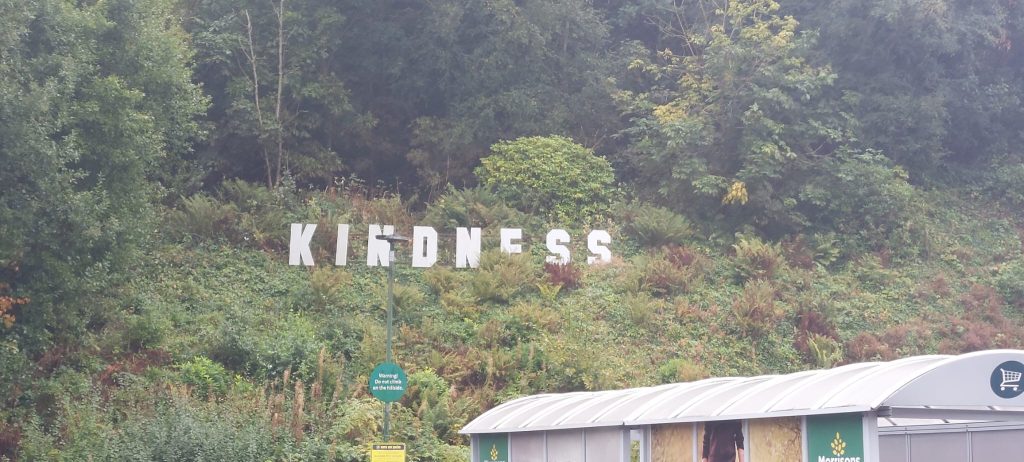
 

Speech to Maternity Festival Wales and South West England

Love is the Way: Systemic Kindness, 

How to structure kindness into Maternity Services.

Cardiff Sept 2026


Welcome all! Here in the room and online!


SLIDE 2

Bishop Curry at the wedding of Prince Harry and Megan quoted Martin Luther King saying 

‘We must discover the power of love, the redemptive power of love. And when we do that, we will make of this old world a new world, for love, love is the only way.’’’


And he goes on to say:

Imagine this tired old world when love is the way, unselfish, sacrificial, redemptive. When love is the way, then no child will go to bed hungry in this world ever again. When love is the way, we will let justice roll down like a mighty stream and righteousness like an ever-flowing brook. When love is the way, poverty will become history. When love is the way, the earth will be a sanctuary. When love is the way, we will lay down our swords and shields down, down by the riverside to study war no more. When love is the way, there’s plenty good room, plenty good room, for all of God’s children. Because when love is the way, we actually treat each other, well, like we are actually family. 


Love is the way.  These are not platitudes and sentimental twaddle, this is soul and vision and strategy fired in the experiential furnace of structural and systematic racial discrimination and violence, with added persecution for those who resisted. In the words of Maya Angelou this is love that is both tough and tender.


Today as we contemplate and plan for the future of maternity services we need to learn the lessons of the black civil rights leaders.  If we want to put the Care back into Maternity Services, if we want to end the epidemic of maternal trauma, midwifery burnout and HCPs simply leaving the service… then Love is the only Way.


Twenty minutes is not long enough to provide a how-to guide on systemic kindness for Maternity Services, nor a thorough exploration of the arguments for implementation.  To hear more you will have to invite me to give you the full talk and some basic compassion and kindness training.  But I can give you a starter for 10 with headlines and signposts in three broad points. 


Slide 3

  1. Practice and Evidence:


A piece of research was done on some seminarians at a US college.  The students were told to research and write a sermon on the Good Samaritan which they would have to preach on a certain day for assessment.  The venue was so arranged that the students, one by one would have to cross campus to reach it, and an actor was set up part way to be a man in distress  – apparently homeless and drunk.  The researchers wanted to know who would stop and help the man and why.  


What they discovered was that stopping to help had nothing to do with the study and reflection on the Parable of the Good Samaritan. It was not predicated on whether the students rated themselves or others as kind either. What was critical was whether the person felt they had the time to stop – Those in a rush did not stop even if they had time, those who felt okay even if they were running late would stop. Time for kindness. Hold that thought.


Stephen Trxeciak is an A&E Consultant.  As he put it – you only meet me on the worst day of your life. After 20 years of this role he was burnout and mentally broken. Burnout was not uncommon amongst his colleagues, but whilst his colleagues’ response was to resign, retire and retreat to the country, he did something different: He did a deep dive into research.  What he discovered from over 2000 papers, was that kindness had an enormous impact on patient outcomes …and clinician mental health.


There was one piece of research he quotes at length for its outcomes: Oncology patients were split into a control group and an intervention group. The intervention was this:  At the beginning of the consultation the Doctor said and I quote:


I understand this is a very difficult time for you and this is a difficult conversation.  If there is anything you don’t understand or you want to ask, 

do not hesitate to stop me.  Because we want to support you every step of the way.


At the end of the consultation they said:


” I know this has been a very difficult conversation, be assured that we care for you and will be with you along this whole journey.


That is it.  That is all.The results showed that the patients who had this intervention did better than the control group. But there was more: the doctors providing this intervention also reported better mental and emotional wellbeing, lower stress etc. The medical staff benefitted from kindness as much as the patients. Hold that thought.


How much extra time did this intervention take in each consultation? They did time it: 40 seconds. An extra 40 seconds to be kind.

Do we have time for kindness? Do we have 40 seconds to be kind in our consultations? Kindness that benefits both the receiver AND the giver? 

Can that amount of time be structured into our system do you think?


Second. Practice makes Perfect.

It has been demonstrated that we all have within us the desire for kindness and the propensity to show great altruism.  People don’t come into maternity services saying I want to be a midwife or an Ob to be cruel to women and cause them harm.  So I am not going to patronise anyone here by saying you need to be more kind. 


What I do want to say is that to be a good pianist takes piano lessons and a lot of practice, to run a marathon requires training and commitment, to learn a profession such as midwifery requires training, learning and practice.  In the same way, say the Tibetans now backed up by neuro-science and psychology – to get really good at compassion and kindness you need commitment, training and practice. Not because you are not kind without it but because it takes practice to get really good at it – professional you might say, and it can take training to be good at it without burning out. 


Being really good at kindness and compassion benefits not just other people but also yourself.


SLIDE 4

I don’t have time to take you through a sample practice etc. so I am simply going to put on the screen here some loving kindness phrases.

  • If you feel comfortable now, hand on heart choose a phrase: May I be safe… Be curious about how it makes you feel – there is no special way you should feel. How would it be if you could show this kindness to yourself every day?
  • You may find it easier to say it for a loved one or someyour feel grateful towards….And then say it for both of us….may we be safe…
  • If you make it a daily practice you can say the phrases for the people you know you will meet today, maybe as you go along.
  • Maybe if you feel bold you can try saying the phrases for someone who irritates you sometimes. 
  •  If you are having a bad day say the phrases for yourself and anyone else having a crap time like you. I say the phrase – “Just like me there are people around the world who are grieving, in our pain may we all be filled and surrounded by loving kindness.”
  •  If saying the phrases is driving you nuts one day, stop – give yourself some kindness: put your hand on your heart or give yourself a hug.  The way you feel is the way you feel – there is no judgement in kindness, just love. And love is the way.


Doing this practice daily is a commitment although it does not take very long to do it. It is not a quick fix either but I can tell you from my experience (and you can read it in my book Born Stroppy) that it is transformative. Neuro-science backs this up: repeating these phrases builds new neural pathways, they teach your brain a new language to frame attitudes both towards yourself and towards others. If you are interested there is so much work on this!


SLIDE 5

Back to Dr T in his dark mental place. Having done his research,  he decided in his terms ‘to double down on kindness’ : towards his patients, towards his colleagues  and so towards himself. He sought to be kind at every consultation, be kind in every interaction with a colleague, to always have a few seconds to be kind.  He says that in his research project of n1, himself, this daily intention and practice of kindness towards others enabled him to slowly recover from his own burnout and has enabled him to remain working in his chosen professional role. He says he is no way a master at it, but every day it is his intention to continue to be kind.


Friends and colleagues. Kindness is a choice you make, it is not about having time, it is not about being saintly, it is a down to earth practical intention to make every interaction an opportunity for kindness.

PAUSE Love is the way.


Third. Practice makes policy.

SLIDE 6

Robin Wall Kimmerer, mother, scientist, decorated professor of Environmental Biology, quotes the native scholar Greg Cajete in her seminal book Braiding Sweetgrass saying ‘that in indigenous ways of knowing, we understand a thing only when we understand it with all four aspects of our being: mind body emotion and spirit.’ She goes on to say that “I came to understand quite sharply when I began my training as a scientist that science privileges only one, possibly two of those ways of knowing: mind and body.”

 I cannot help reflect that as with the environment, our reductionist medical view of birth and the maternal journey is doing great harm to mothers and babies – where is the respect for the knowing of emotion and spirit? Mothers give birth with their whole selves, not just their uterus! The child is conceived in love, birthed for love and brought up by love. Where is our awe, our quiet devotion to the process unfolding, our compassion?

SLIDE 7

I am with Donella Meadows, expert in complex systems who says:

No one can define or measure justice, democracy, security, freedom, truth or love. No one can define or measure any value. But if no one speaks up for them, if systems aren’t designed to produce them, if we don’t speak about them and point toward their presence or absence, they will cease to exist.  ”

  1. Meadows; Thinking in Systems: A Primer; 2008

Our values play out through our systems whether we like it or not, and if kindness is not intentionally built into the system like Blackpool through rock, then friends, we build a system without kindness and that – whatever our intentions otherwise – dispenses cruelty.

Being unaware of system effects results in ‘traps’ and ‘surprises’ says Meadows, where outcomes actually undermine what you set out to do. Indeed the outcome can be the opposite of the original intention. There is plenty of evidence of that! Here I reflect on what might be one example with the help of presentations by Su Down Bev Jervis and Andrew Weeks:

It was 2013 I think when Jeremy Hunt as health secretary set up the policy aim to reduce still birth and halve maternal deaths.  Laudable aims we might say but 11 years later reports and stats show as Soo Down and Bev Jervis point out that the still birth rate might be slightly lower but induction and CS rates are rocketing, maternal deaths 20% higher than 2010, trauma has vastly increased and we pay more on litigation than we do on maternity care. If we compare our stats with other countries, our infant mortality is higher than many countries with lower medical intervention rates.  

Could this be a systems trap where we have used a reductionist medical model to reduce stillbirth with the unintended consequence of rising maternal trauma, mortality and increasing litigation? What if we had made our policy aim instead to cherish every child and mother, with continuity of carer over 1000 days, and the full range of social, economic, as well as medical levers to do so. I think it was once called Sure Start. In making our policy aim to Cherish every child could we attain the same outcome without the collateral damage to mothers, families and our maternity systems? Love is the way


SLIDE 8

So how do we build kindness into the system? Well, as with our personal life, organizations have to make the intention to be kind: to cherish every mother and child and support every staff member who provides the care. I notice that in the Strategic Vision for Nursing and Midwifery in Wales, Sue Tranka sets out Compassion as an intention in her introduction. But it is not good enough if it stays there – Yes Minister style, get it out of the way in the introduction and then you don’t have to mention it again!. Kindness and compassion needs – and needed to be at the top of every page, written into every policy from staffing, to HR, to clinical guidelines. And then, friends, it is important to say, it needs to go into the evaluation, ensuring every dashboard has a metric for kindness and compassion so it is measured and evaluated alongside other outcomes. In my book I quote a senior midwife who commented during a sensitive discussion about women refusing to let midwives into the room – that there was no metric for TLC and so HCPs are not accountable for it. 


In social enterprise we call it the triple bottom line – ie its not just about finance, its not just about clinical outcomes – live mother live baby, its about how cherished mothers and babies are – the social bottom line. That this is not easy to do is to be acknowledged, that it can be done, and is being done and there is an army of expertise developed over decades to help do it, is the reality we need to action now.


Are we in the maternity professions up to this challenge, are we as a nation in Wales and England willing and able to make kindness front and centre of our maternity system?

 For the sake of my children and my grandchildren I sincerely hope so. I weep, I weep for my young sisters suffering now.

Conclusion

SLIDE 9

Martin Luther King said, We must discover the power of love, the redemptive power of love. And when we do that, we will make of this old world a new world, for love, love is the only way.


And I say, Imagine this maternity service when love is the way, unselfish, sacrificial, paid for.  When love is the way every mother and child feels cherished: no mother and child will go unloved and uncared for. When love is the way physiology is respected and the bodily autonomy of women and birthing people is guarded, no woman is medically violated, When love is the way every midwife feels seen and acknowledged and supported, when love is the way managers are resourced to support their staff. When love is the way there are no longer false professional boundaries and hierarchies, when love is the way midwives and doctors and service users sit down together to work out what is best with mutual understanding and respect. When love is the way we all benefit from holistic maternity care whose benefits extend for decades to come in happy healthy families. 


We must discover the power of love, the redemptive power of love. And when we do that, we will make of this old maternity system a new one, based on kindness and compassion, for love, love is the only way.

SLIDE 10


References:

Bishop Curry, Sermon at Harry and Megan’s Wedding in 2018: https://www.npr.org/sections/thetwo-way/2018/05/20/612798691/bishop-michael-currys-royal-wedding-sermon-full-text-of-the-power-of-love

Maya Angelou, Wouldn’t take nothing for my journey now; Virago Press 1994 p7

Daniel Goldman (2007)TED Talk. Available at https://www.ted.com/talks/daniel_goleman_why_aren_t_we_more_compassionate?subtitle=n

Healthcare’s compassion crisis, Stephen Trxeciak (2018) TED Talk. Available at: https://www.ted.com/talks/stephen_trzeciak_healthcare_s_compassion_crisis_jan_2018

Born Stroppy; Make Change Happen; Book Brilliance; 2025

Robin Wall Kimmerer; Braiding Sweetgrass; Penguin; 2013

  1. Meadows; Thinking in Systems: A Primer; 2008

Soo Down, ARM Conference Presentation June 2026

Bev Jervis, ARM Study Day June 2025

Andrew Weeks, Maternity Festival Bradford June 2026

Nadia Higson, AIMS: Jeremy Hunt set the target to halve stillbirths by 50% by 2030 in 2013. That was later brought forward to 2025. The target has not been achieved Stillbirth reduction target missed in England and Wales, new figures show | Tommy’s . The original target was also to halve maternal deaths so that certainly hasn’t been met New ambition to halve rate of stillbirths and infant deaths – GOV.UK According the MBRRACE lay summary  “Headline figures from MBRRACE-UK highlight a 20% increase in the rate of maternal deaths since 2010 when a previous government ambition was set to halve the number of deaths by 2025”. So I think it’s worth pointing out that the original target was to reduce maternal deaths too. Not only has the target for stillbirths been missed and but maternal deaths are up. Perhaps also that we’ve used a medical model to try to reduce stillbirths and it isn’t even working.


Events Calendar for June and July

Events where you can pick up a signed copy of Born Stroppy or talk to the author:

12th June Online book Launch: RSVP bornstroppy@gmail.com

16th June At CBLARM regional event in West Yorkshire (join ARM to find out more)

23rd June 12-2pm Guest Speaker for 3vangelical Course; you can join this one session for free via zoom.  email here for a zoom link: office@utusheffield.org.uk

25th June 7.30pm At the Powys WI Regional Summer Event reading poetry and prose including from Born Stroppy in an evening of poetry and song with Vivace Community choir.

12th July selling books at the Northern Faith in the City 40 Years on Conference at the Urban Theology Union.  For more information and booking go here: www.eventbrite.co.uk/e/faith-in-the-city-40-north-tickets-1224760715269

26th July Launch of the Festschrift for John Vincent that includes an article written by me.  For more information and to book to join us email: office@utusheffield.org.uk

More events, talks and appearances are in the pipeline.  if you want me to speak at your event, or provide a workshop then feel free to contact me  her bornstroppy@gmail.com

RAIN Practice

In Born Stroppy, I candidly share an episode of anger and sadness to demonstrate the cost of maternity activism but also to talk about the RAIN practice and how it helps us deal with these strong emotions.

This week I was reminded of the part of the book and the RAIN practice when a friend tragically died.   I came home, angry and irritable – I was annoyed with my daughter for leaving her stuff around, I was annoyed that the bath was not cleaned properly I was irritated by the piece of wood I had to walk around for a week whilst David did his DIY… but luckily it was time for my meditation practice and as soon as I shut the door and sat still I realised that these small irritations were proxies for the BIG ONE – that my good friend had died, and her partner another good friend was in deep grief.  Why did the world have to be like this! I was angry…but because I was hurting.This was the R of RAIN – Recognising what is really going on. The tears came and I stopped being brave and allowed and accepted my feelings – the A of Rain. I then paid intimate attention to myself and my feelings – the I of RAIN. My shoulders dropped – I did not need to fight this, I felt the heaviness in my heart, I watched a mind desperate to escape sorrow look for something else to think about – and held it all with compassion as I held this bereaved family with compassion, as I held all those who grieve this night with compassion.  And so the N of rain: nurturing myself, holding myself gently. And also opening wide to all – because this is not all about me, and not all of me is this: being human can be difficult and we all need and deserve compassion especially when we are grieving. So I came to rest and feel centred. When I left the room, I could hug my family and the minor irritations did not matter anymore.  Over the next few days I have had to return again and again to Recognising what I am really feeling, Acknowledging it, giving it Intimate attention and Nurturing myself.  Although not easy to do, I find it alot easier than my old habits of trying to ignore it and making it about something else easier to shout about!  If you want to know more, look up Tara Brach who teaches the RAIN practice.  In the meantime, here is how I wrote up this experience.


ANGER.

Things are not as I want them to be:

the bath needs cleaning , what my daughter said, the wood in the way

…and D dying,

and K grieving

It maybe the way of the world

But it is not the way I want it to be!


And now tears…of an aching heart.

Comfort, comfort my hurting self

Sooth, sooth my grieving self

Open, open to love and compassion

For all those who hurt and grieve

this night.

Liberation Hermeneutics and Tacking Against the Wind

Ruth Weston maternity activist and alumni of the UTU book and phd group gave a reading  from her book Born Stroppy, which will be published in February next year.  She read the part where she explains the Liberation Theology methodology that underlies her activism and her attitude to making change happen.  Here she reflects on the session and the take-aways from it:

In my presentation I talked about the liberation hermeneutic or methodology that underlies my maternity activism which runs like this:

  1. Use a small cameo or short story to encapsulate the predicament or issue
  2. Use historical eco-social analysis to unpick what is going on asking such questions as: Where does the power lie? And, How did that occur? Whose interests are served in this scenario? and so on.
  3. Turning to scripture we look for biblical stories that reflect something of the story and analysis.
  4. And then we take a practical action for change

We evaluate the action we have taken, using the first three steps above to plan our next action, so the process is a spiral of action, analysis and reflection. And this process can be undertaken at every strategic level whilst trying to effect change.


I then reminded them of the words of Jim Wallis : change does not necessarily happen by exchanging one wet-fingered politician for another but by changing the way the political wind blows.  And so we reflected on how sometimes that involves catching a favourable wind when it turns, putting the sail up and going with it:  Opportunistic action. In my practice I have been ready to jump in when an opportunity arises to make change or gain publicity for my cause.  By contrast, what do we do when the wind is blowing against us?  And we reflected on how we might be tacking back and forth to make progress against the wind.


We also talked about at the grassroots how, sometimes, people are satisfied with the progress made for now even if not ideal or structurally changing things. We also talked about the role of active observer or witness, how the solidarity of those who cannot act in the situation is appreciated by those who are: an example was given of a session/training on sexual harassment where the online observers were thanked for being willing to participate as observers of the event.  This reinforces the truth that there are many different ways and roles in activism and the most important thing is to do what you can when you can and take the opportunities when they arise.  We need to acknowledge and hold the tension of taking the action we can, in the context of also recognising the wider structural injustices that cause the injustice and frame and limit our ability to act. And when the wind is against you keeping tacking! Or observe the Palestinian practice of samud – the non violent resistance of steadfastness and hope in the face of oppression and your own powerlessness.


You can pre-order Born Stroppy! Ruth’s book, here:  https://ruthweston.co.uk/books/


Changing the way the wind blows – ARM November 2024

Ruth Weston and cover of book Born StroppyDear all,

For those who missed another fabulous ARM conference that left me buzzing. Here is my 5 minute speech to hopefully give you a buzz.

Buy that book and make that vow!


Changing the way the wind blows

ARM November 2024

Because it is important to grasp, that politicians; at Westminster, the Town Hall, NHS Commissioners and managers – politicians are wet fingered: they hold their wet fingers up to SEE WHICH WAY THE POLITICAL WIND IS BLOWING!

And so it is true to say that change will happen not so much by replacing one wet-fingered politician with another, as much as changing the way the political wind blows.  As ordinary women and men, we may not be able to change the actual people making the decisions in the health and maternity services, but we do have it within our power to change the way the political wind blows: by that I mean the criteria, the culture, the context in which those decisions are made.

We need to be determined, clever, fun.

We need to band together to organise and unionise, to write letters and demonstrate. 

And we need to educate, educate, educate.

Talk to our daughters, sisters, mothers;

Talk to our sons, husbands, brothers;

And we need to fearlessly claim our heritage to birth and bring to birth, 

To be the women, the mothers, the midwives we are.

We need to campaign as determinedly and creatively as we give birth, 

Because our daughters are worth it – not sire why this is red either

– and so are we.

Nb This below should not be in italicised apart from Everyone!

I am so pleased to be here alongside two other authors publishing their books today.  As a community we need to be publishing books, we need to be writing reports and setting up studies and publishing research.  We need to be lobbying Government and health agencies, standing for Parliament and nominating our senior leaders to the Lords. We need to do all this and more as part of demanding a maternity service that is fit for purpose.  

I remember years ago Caroline Flint talking to a previous conference about the beginning of the ARM.  She talked about making a vow to speak everyday about midwifery and about homebirth.  There at the supermarket checkout….beep…we drink a lot of tea you know…beep…I am a midwife and midwives drink a lot of tea…beep… and biscuits…whilst we are attending a homebirth….

I made a similar vow in my own way talking about birth and breastfeeding at the school gates, at work, at church, on the train – that was a laugh with a carriage full of drunk firemen!  Honestly, even now at a business meeting I will have the birth story of everyone at a meeting including the men – especially the men thinking about it!

To change the way the wind blows it will take all of us every day doing something to champion midwifery and a proper maternity service. Every day.  It will mean different things depending on our roles in life, but every day we all need to be doing something to champion midwifery and demand a maternity service fit for purpose.  It will take thousands of us, techno-literate and media savvy to make it impossible for our cause to be ignored.

I would like you to buy BORN STROPPY – of course I would! – I think it will help you make change happen, it gives you tools and strategies and ideas- AND there is a never to be repeated offer for you conference delegates  – £15 a book signed and delivered!.  

But, it really does not matter if you buy my book or if you don’t – it really does not matter.  Because what really matters (to me) is that you make that vow today, you make that vow and go from here championing midwifery and autonomy for women and birthing people every single day using every tool and trick in the book. HANDS UP FOR MIDWIFERY! Because then I will know that in my life time we might change the way the political wind is blowing for maternity and have the maternity care we deserve.  That is my dream and I hope it is yours.

Remember politicians; at Westminster, the Town Hall, NHS Commissioners and managers – politicians are wet fingered: they hold their wet fingers up to SEE WHICH WAY THE POLITICAL WIND IS BLOWING!  So let’s change the way the wind blows today! 

Ruth Weston addressing Association of Radical Midwives, Birmingham 2024.


Aquabirths’ Ruth Weston: Birth Activism Book!

Changing the world of birth means giving those with the passion for activism the tools to take the plunge, or dive deeper. Who better to share these tools than the woman who has been at the leading edge of change in birth activism for over two decades? Ruth Weston shares her life experience as an activist who makes things happen, who makes things get done. Anyone, lay or professional, who is interested in making birth better, needs Born Stroppy!

If you are at the ARM National Conference, Hands Up for Midwifery at Birmingham City Hall on 16th November then you will have a chance to meet the author and see a preview of the book cover and more.  Say hello to Ruth in the market place or send her a message of support on the day (because she will be nervous!)

QR Code to buy bookSpecial ARM Delegate Offer! £15 including P&P for the first 100 purchases saving £5 on the RRP.  Free chapter sent early to keep you going! Buy now HERE

https://www.facebook.com/people/Ruth-Weston-Speaker-Author-Change-maker/61556828767933/

or @bornstoppy (on the former twitter)

 You can pre-order the book by emailing us at: office@aquabirths.co.uk